
Do You Need a 3T MRI for a Hip Injury?
Learn when 3T hip MRI can help for labral tears, FAI, cartilage, stress fractures, and avascular necrosis, and when X-ray, 1.5T MRI, or MR arthrogram is enough.
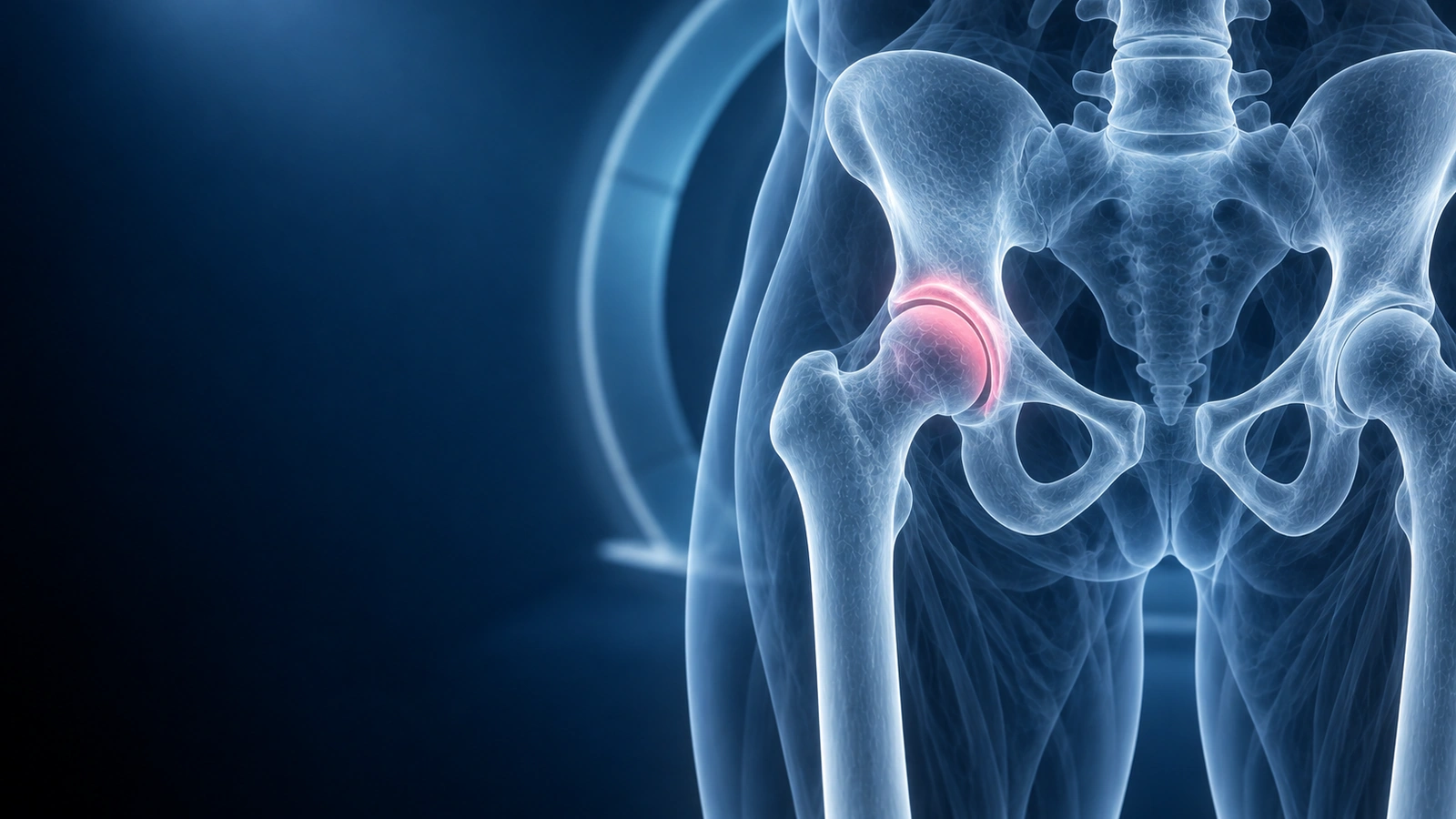
A 3T hip MRI can help when the question is labral detail, femoroacetabular impingement, cartilage injury, stress fracture, avascular necrosis, or subtle marrow edema. It is not the automatic answer for every groin or lateral hip pain problem.
Hip MRI has a second issue: depth. The hip is a deep joint, so coil setup, field of view, patient motion, and whether an MR arthrogram is needed can matter as much as scanner strength.
Quick Answer: When 3T Hip MRI Is Worth Asking About
Ask about 3T when the decision depends on small labral tears, cartilage delamination, early avascular necrosis, occult stress fracture, or subtle FAI-related detail. Do not pay for 3T if standing X-rays, a standard MRI, or a targeted MR arthrogram is the test your clinician actually needs.
Check Your Existing Hip ScanWhen 3T Can Add Value for Hips
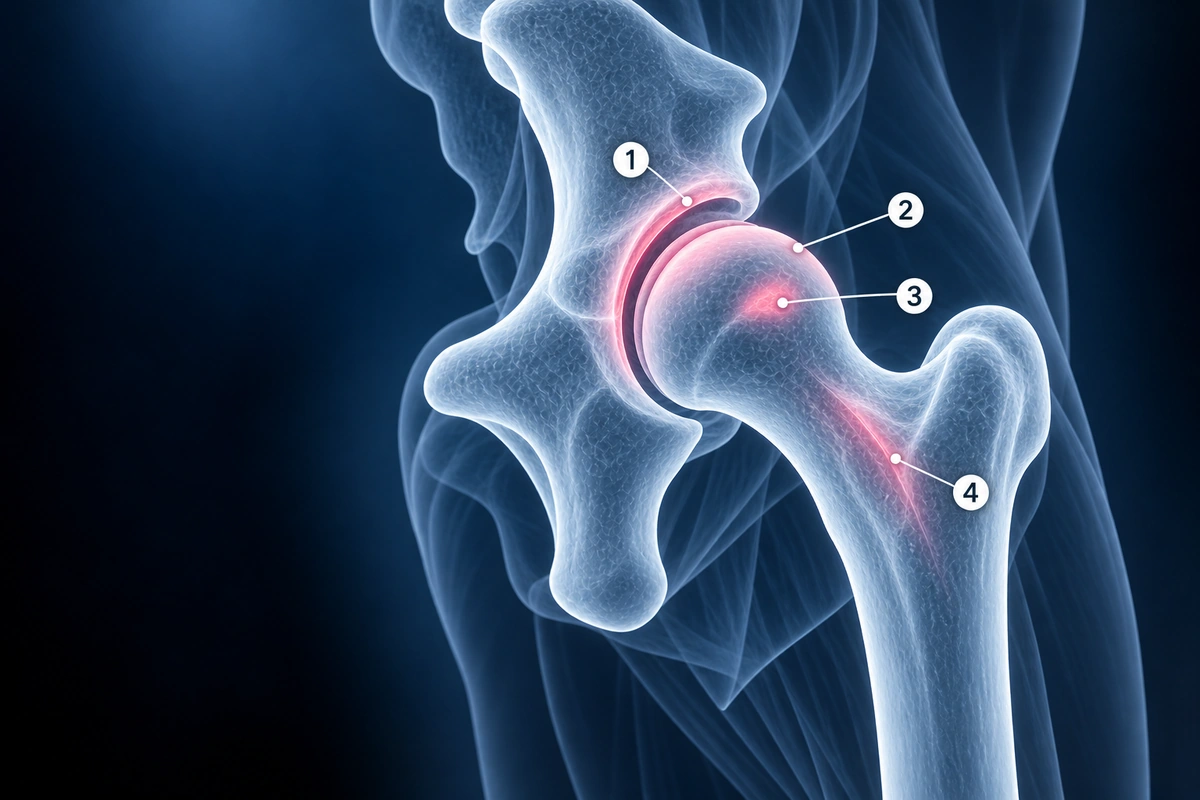
- Labral tear and chondrolabral junction questions in FAI workups
- Cartilage thinning, delamination, or early arthritis when X-ray is not enough
- Early avascular necrosis, bone stress reaction, or occult femoral neck stress fracture
- Post-operative questions where subtle recurrent labral or cartilage injury matters
When You Probably Do Not Need 3T
- First imaging for hip arthritis, where pelvis and hip X-rays are usually first
- Large fracture, severe arthritis, or advanced avascular necrosis already visible on imaging
- Outer hip pain where ultrasound or clinical exam points to bursitis or tendon irritation
- Repeating a recent hip MRI without a new clinical question
3T vs MR Arthrogram for Hip Labrum Questions
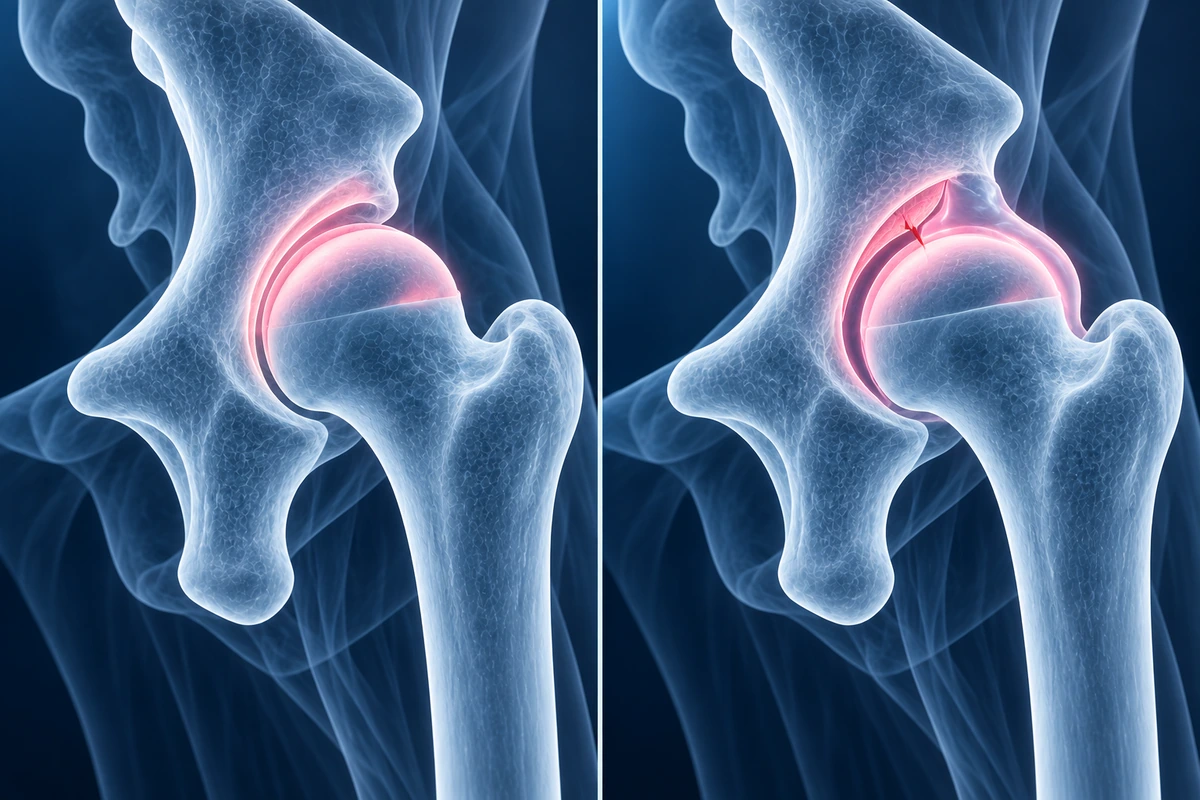
For some labral questions, the choice is not simply 1.5T versus 3T. A targeted MR arthrogram may separate the labrum and cartilage better than a non-contrast exam. For FAI details, compare this with our cam vs pincer MRI guide.
Already Have a Hip MRI or X-ray?
Upload your existing hip imaging for a private AI explanation before paying for another scan. Raw files stay in your browser; optional AI uses rendered images and provides educational context, not a diagnosis.
Upload Hip ImagingKey Takeaways
- 3T hip MRI can help with labrum, cartilage, occult fracture, and early avascular necrosis questions
- Hip X-rays are still first for many arthritis, impingement, and fracture questions
- MR arthrogram may matter more than field strength for some labral cases
- Repeating imaging is useful only when the new scan can change management
Frequently Asked Questions
Is 3T MRI necessary for a hip labral tear?
Not always. 3T can help with small labral and cartilage detail, but some cases need a dedicated hip protocol or MR arthrogram more than a stronger magnet.
Can 3T hip MRI replace X-ray for FAI?
Usually no. X-rays show bone shape, cam and pincer morphology, joint space, and arthritis pattern. MRI adds labral, cartilage, marrow, and soft-tissue detail.
Should I repeat a 1.5T hip MRI on a 3T scanner?
Only if the first scan left a specific unanswered question and your clinician thinks a targeted 3T hip MRI or MR arthrogram could change care. Repeating a clear scan just for a stronger magnet can waste money.
Related Articles
Understand your hip MRI report including labrum evaluation, cam and pincer morphology, cartilage assessment, and AVN detection.
Cam, pincer, and mixed femoroacetabular impingement on MRI — alpha angle, lateral center-edge angle, labral tear patterns, and treatment differences.
Find out if hip labral tears can resolve without surgery, the role of physiotherapy, and surgical options when conservative care fails.
Related Conditions
Ready to analyze your imaging? Upload your MRI or X-ray for AI-powered analysis
Upload your MRI or X-ray DICOM files for private, AI-powered analysis. 4 models analyze independently — raw scan files stay in your browser.
Start AnalysisMedical Disclaimer: This page is for informational and educational purposes only. It does not constitute medical advice, diagnosis, or treatment. AI-generated analysis may contain errors. Always consult a qualified healthcare professional for medical decisions. Full Disclaimer