
Can a Hip Labral Tear Heal Without Surgery?
Find out if hip labral tears can resolve without surgery, the role of physiotherapy, and surgical options when conservative care fails.
Key Takeaways
- Limited natural healing due to poor blood supply in affected zones
- In one study of prearthritic intra-articular hip disorders, 44% of patients improved with conservative care alone.
- Understanding the underlying cause (FAI, dysplasia) is critical
- MR arthrography is the gold standard for accurate diagnosis
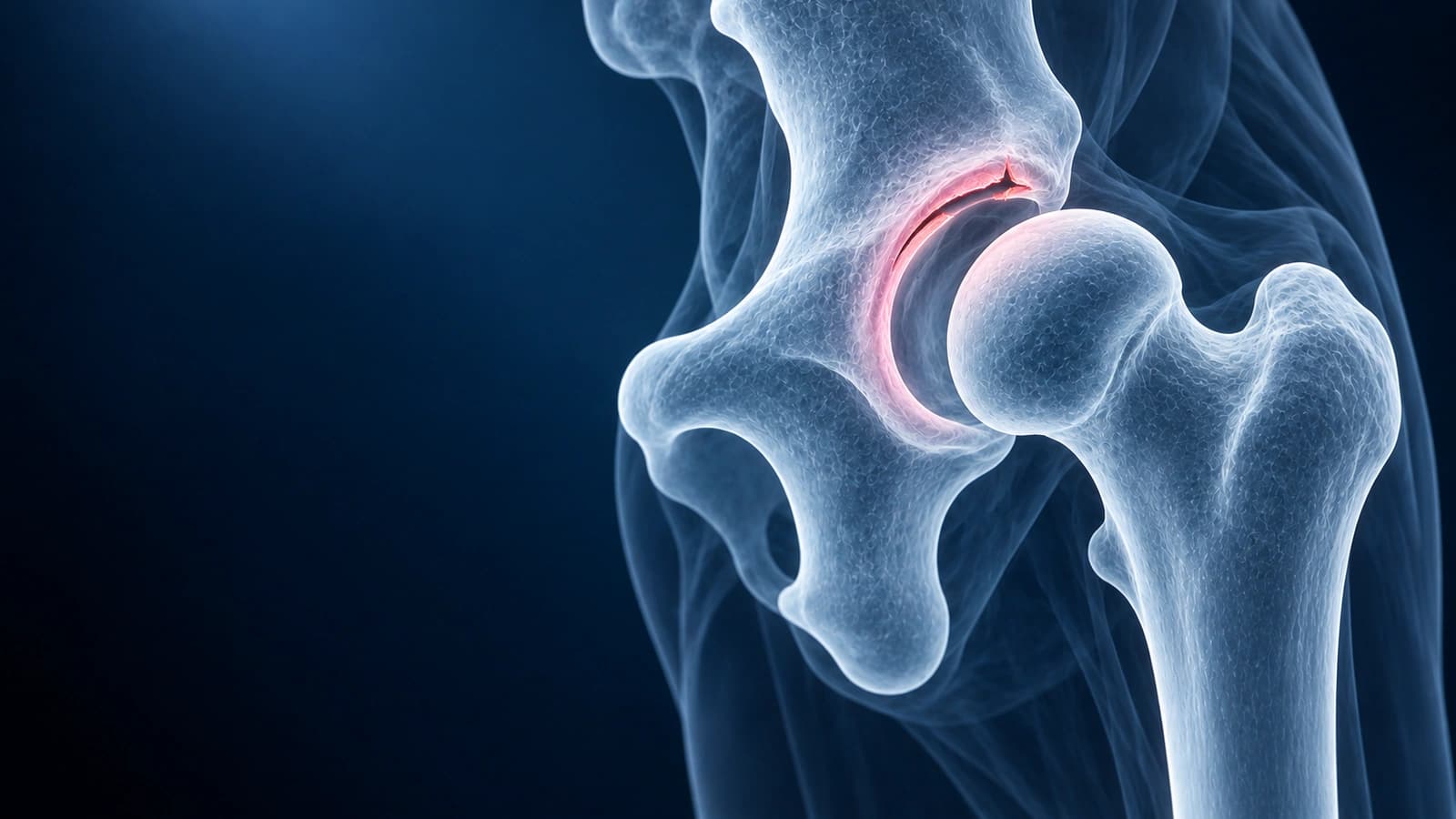
The hip labrum is a ring of fibrocartilage lining the hip socket that provides stability and a suction seal. Hip labral tears have limited natural healing capacity due to poor blood supply, particularly in the anterosuperior zone where most tears occur. However, many patients achieve excellent symptom relief through conservative management, aiming to reduce pain and restore function rather than heal the tear structurally.
Understanding Hip Labral Tear Causes
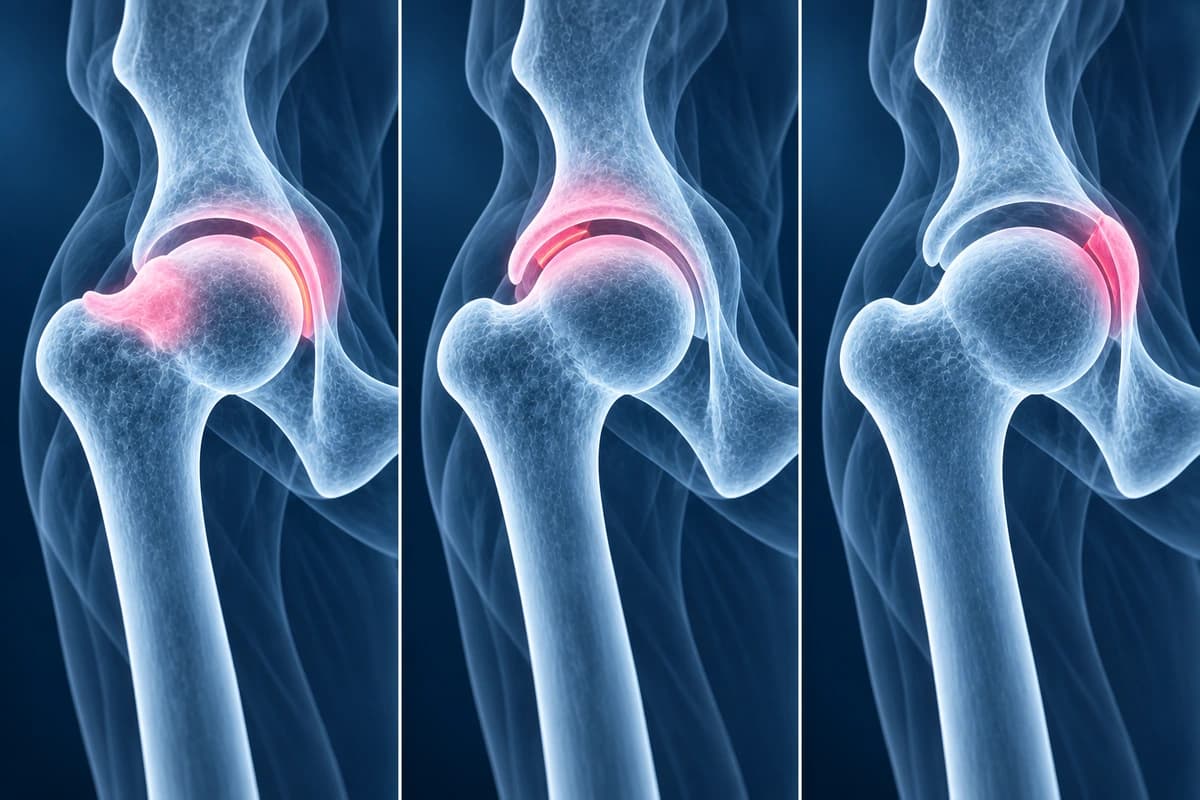
- Cam-type FAI: bony bump on femoral head damages labrum during flexion and rotation
- Pincer-type FAI: excess acetabular coverage creates a nutcracker effect
- Hip dysplasia: insufficient socket coverage overloads the labrum
- Traumatic: acute injury from impact, fall, or forceful movement
- Degenerative: gradual wear associated with aging
Common Symptoms
- Deep groin pain worsening with prolonged sitting or activity
- Clicking, catching, or locking sensation during movement
- Stiffness and reduced range of motion with hip flexion
- Pain radiating to lateral hip, buttock, or front of thigh
- Night pain when lying on the affected side
Conservative Management
In one study of prearthritic intra-articular hip disorders, 44% of patients improved with conservative care alone. This does not mean every labral tear heals structurally. See hip physiotherapy after labral repair for postoperative rehabilitation.
- Activity modification: avoiding deep flexion and aggravating movements
- Physical therapy: hip stabilization, gluteal strengthening, core stability
- Anti-inflammatory medication for acute pain management
- Intra-articular injection for diagnosis and temporary relief
The Role of Femoroacetabular Impingement
If FAI is present alongside a labral tear, conservative management alone is less likely to provide lasting relief because the underlying mechanical cause persists. Arthroscopic surgery to repair the labrum and reshape the bone is often recommended to prevent progressive joint damage.
MRI in Labral Tear Assessment
Meta-analyses estimated sensitivity at 66-80% for conventional MRI and 87-89% for MR arthrography in detecting acetabular labral tears. Performance depends on the scan and study population.
Frequently Asked Questions
How long does conservative treatment take?
A typical program spans 8-16 weeks of structured physiotherapy. If symptoms have not meaningfully improved after 3-6 months, surgical consultation is recommended.
Can you exercise with a hip labral tear?
Low-impact activities like cycling, swimming, and elliptical training are generally well tolerated. Avoid deep squats, lunges beyond 90 degrees, and extreme hip rotation movements.
Will a hip labral tear get worse over time?
Tears caused by FAI may progress if the impinging bone continues to contact the labrum. Degenerative tears may remain stable for years. Regular monitoring helps detect progression early.
Sources
- Kelly BT, Shapiro GS, Digiovanni CW, et al. Vascularity of the hip labrum: a cadaveric investigation. Arthroscopy. 2005;21(1):3-11.
- Hunt D, Prather H, Harris Hayes M, Clohisy JC. Clinical outcomes analysis of conservative and surgical treatment of patients with clinical indications of prearthritic, intra-articular hip disorders. PM R. 2012;4(7):479-487.
- Smith TO, Hilton G, Toms AP, et al. The diagnostic accuracy of acetabular labral tears using magnetic resonance imaging and magnetic resonance arthrography: a meta-analysis. Eur Radiol. 2011;21(4):863-874.
- Zhang P, Li C, Wang W, et al. 3.0 T MRI is more recommended to detect acetabular labral tears than MR arthrography: an updated meta-analysis of diagnostic accuracy. J Orthop Surg Res. 2022;17(1):126.
Related Articles
Understand your hip MRI report including labrum evaluation, cam and pincer morphology, cartilage assessment, and AVN detection.
Post-arthroscopy hip rehabilitation guide covering protection, mobility, strengthening, and return-to-activity phases.
Cam, pincer, and mixed femoroacetabular impingement on MRI — alpha angle, lateral center-edge angle, labral tear patterns, and treatment differences.
Related Conditions
Understand your imaging before your next appointment
MRI, X-ray or CT from a CD, folder or ZIP. A PDF report or photos of the films work too.
Free to open and preview, no account needed. An optional AI report from $10 explains your images in plain language, with questions for your doctor.
Your raw files stay on this device. Only rendered images and minimal context are sent when you request an AI report.
Medical Disclaimer: This page is for informational and educational purposes only. It does not constitute medical advice, diagnosis, or treatment. AI-generated analysis may contain errors. Always consult a qualified healthcare professional for medical decisions. Full Disclaimer